

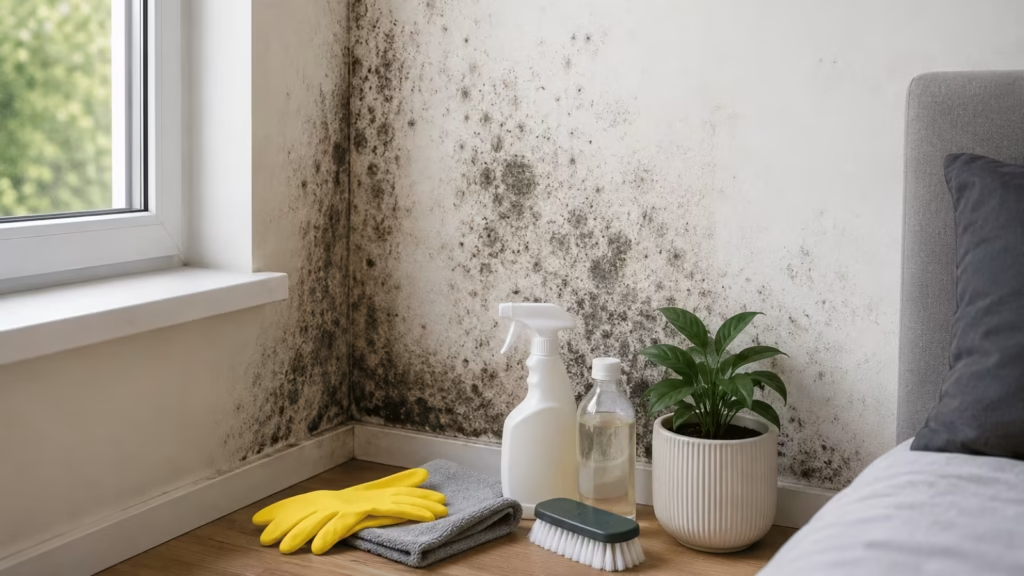
Mould on bedroom walls is one of those problems that starts small and easy to ignore, then gets harder and harder to overlook. A few black spots in the corner become a spreading patch. A faint damp smell turns into something you notice the moment you walk in. If your bedroom has visible mould, peeling paint, persistent condensation on the windows, or that stale musty odour that never fully clears, you’re dealing with a moisture problem that needs proper attention.
The good news is that most bedroom mould is completely fixable without calling in specialists or spending a lot of money. Moisture and poor airflow are behind the vast majority of cases, which means cleaning the mould and changing a few habits at home is usually enough to solve it for good.
This guide covers exactly how to remove mould from bedroom walls safely, what causes it to grow in the first place, the mistakes that make things worse, and the practical steps that will stop it coming back.
Why Mould Grows on Bedroom Walls
Mould is a fungus that needs moisture, warmth, and something to feed on. Bedroom walls provide all three, particularly during autumn and winter when windows stay closed and heating creates a temperature difference between the warm air inside and the cold surface of external walls.
Condensation is the most common cause. When warm, moist air from breathing, perspiration, and everyday activity hits a cold wall surface, it turns into water droplets. Over time those droplets soak into plaster and paint, creating the damp conditions mould needs to establish itself.
Poor ventilation makes condensation worse. Bedrooms that are kept sealed with no fresh air movement trap moisture indoors continuously. The problem is especially bad in rooms where clothes are dried on radiators or clothes horses, which releases a significant amount of water vapour into the air with nowhere to go.
Cold walls themselves are a major factor. External walls that are poorly insulated stay cold even when the room feels warm. That cold surface is where condensation forms most readily, which is why mould on bedroom walls tends to appear in corners, near windows, and behind large pieces of furniture like wardrobes and beds that sit flush against external walls. The furniture blocks airflow and creates a pocket of cool, stagnant air where moisture accumulates unseen.
Excess humidity from other parts of the home can also drift into bedrooms if internal doors are left open while cooking, showering, or bathing without adequate extraction. A bedroom that feels slightly damp all the time, not just in winter, may be receiving moisture from elsewhere in the property.
Is Bedroom Wall Mould Dangerous?
Mould in a bedroom is more of a health concern than mould elsewhere in the home simply because you spend several hours a day breathing the air in that room while sleeping. Most household mould releases spores continuously, and those spores are small enough to be inhaled deeply into the lungs.
For most healthy adults, occasional exposure to low levels of mould causes minor irritation at worst. Persistent exposure is a different matter. Regular breathing of mould spores can cause a nagging cough, frequent sneezing, watery or itchy eyes, skin irritation, and a general feeling of fatigue that is hard to pin down. People often don’t connect these symptoms to the mould in their bedroom until the mould is removed and the symptoms clear up.
For people with asthma, the situation is more serious. Mould spores are a well-documented asthma trigger and can cause more frequent or more severe attacks. People with allergies may find their symptoms significantly worsen in a mouldy bedroom even if they manage well elsewhere. Children and older adults tend to be more sensitive to mould than healthy adults because their immune and respiratory systems are either still developing or less robust.
Black mould, which often appears as dark green or black patches with a slightly fuzzy texture, is the type most commonly associated with health concerns. If you have any doubt about whether the mould in your bedroom is a type that poses a significant health risk, it is worth getting a professional assessment, particularly if the patch is large or if someone in the household has a respiratory condition.
How to Remove Mould From Bedroom Walls
Before you start, check the size of the affected area. Patches smaller than roughly one square metre can usually be tackled safely yourself. Anything larger than that, or mould that keeps returning quickly despite cleaning, may indicate a deeper damp problem that needs professional investigation.
-
1
Prepare the Room Safely
Open all windows as wide as possible before you start. You want good ventilation flowing through the room while you work. Put on rubber gloves, a dust mask or respirator, and if you have them, safety glasses. Mould spores become airborne when disturbed during cleaning, so protecting your airways matters. Lay old towels or a sheet of plastic on the floor beneath the affected area to catch any drips, and remove bedding and soft furnishings from the room where possible to avoid cross-contamination.
-
2
Use White Vinegar
White vinegar is one of the most effective household treatments for mould on walls and is far gentler on surfaces than bleach. Its acidity kills mould at the surface and helps prevent it from returning. Pour undiluted white vinegar into a spray bottle and apply it generously directly onto the mouldy area. Do not dilute it — full strength is needed for it to work properly. Leave it to sit for at least one hour without wiping. After an hour, scrub the area firmly with a stiff brush or an old cloth using small circular motions. Drop used cloths straight into a bag for disposal rather than rinsing them in the sink. Wipe the wall clean with a damp cloth, then dry immediately.
-
3
Use Baking Soda
Once you have treated the area with vinegar, baking soda makes a useful follow-up. It neutralises the musty odour that mould leaves behind and helps lift any remaining residue from the wall surface. Mix one teaspoon of baking soda with two cups of warm water in a spray bottle, shake well, and spray over the treated area. Scrub gently with a soft cloth or brush, then wipe clean. Unlike vinegar, baking soda is mild enough that it can be used on painted walls without risk of damage. If there is significant staining left after cleaning, a dedicated anti-mould paint applied after the wall is fully dry can help cover and protect the surface.
-
4
Use Anti-Mould Spray
For heavier mould growth or patches that have been there a while, a proprietary anti-mould spray from a hardware or supermarket is worth using. These products typically contain fungicides that penetrate deeper than vinegar alone. Follow the instructions on the label carefully — most require you to apply, leave for a set time, and then wipe away without rinsing. Always keep windows open when using these sprays and avoid breathing the fumes directly. Keep children and pets out of the room until the product has dried and the room has been ventilated thoroughly.
-
5
Dry the Area Completely
This step is just as important as the cleaning itself. Any moisture left on the wall after treatment creates the exact conditions mould needs to regrow. After scrubbing, wipe the wall with a dry cloth and then leave the windows open for as long as possible. If you have a fan, point it at the wall to speed up drying. A dehumidifier running in the room for a few hours after cleaning will remove residual moisture from both the wall and the surrounding air. Do not replace furniture, hang curtains back, or close the room up until the wall is completely dry to the touch.
Mould Removal Methods Compared
Different situations call for different approaches. Here is a quick comparison of the most common mould removal methods to help you choose the right one for your bedroom walls.
| Method | Best For | Effectiveness | Safety |
|---|---|---|---|
| White vinegar | Light to moderate mould, painted walls | High — kills most mould types | Very safe, no harmful fumes |
| Baking soda | Odour removal, gentle surface cleaning | Moderate — best used after vinegar | Completely safe |
| Anti-mould spray | Heavy or persistent mould growth | Very high — penetrates deeper | Use with ventilation and gloves |
| Bleach solution | Non-porous surfaces only | Surface level only | Strong fumes, can damage paint |
| Anti-mould paint | After cleaning, as a protective layer | Preventative, not a cure | Safe when dry |
Mistakes That Make Mould Worse
Painting over mould without treating it first is probably the single most common mistake. It looks like a quick fix and the wall looks clean immediately after, but the mould carries on growing underneath. Within a few weeks or months the paint starts to bubble and discolour and the problem returns worse than before. Always treat and fully remove the mould before any repainting.
Using too much water during cleaning is another easy mistake to make. If you scrub with a soaking wet cloth and leave the wall damp, you are simply replacing one moisture source with another. The wall needs to be cleaned with enough moisture to lift the mould and then dried as quickly and thoroughly as possible.
Blocking airflow in the room makes the underlying problem significantly worse. Pushing wardrobes, bed frames, and storage units tight against external walls creates dead air pockets where condensation accumulates and mould thrives. Even a gap of five to ten centimetres between furniture and the wall makes a meaningful difference to airflow and moisture levels.
Ignoring condensation on windows is also a mistake. Window condensation is a visible sign that your bedroom air is holding too much moisture. Wiping windows dry each morning takes about thirty seconds and removes a surprising amount of water from the room before it can spread to walls and corners.
Sealing rooms completely to keep them warm in winter, particularly at night, traps all the moisture produced by breathing and perspiration with nowhere to go. Leaving a window open on a small vent setting overnight makes a significant difference to overnight moisture buildup without making the room uncomfortably cold.
How to Stop Mould Coming Back
Improve Bedroom Ventilation
Ventilation is the single most effective long-term fix for bedroom mould. Opening windows for at least fifteen to twenty minutes each morning, even briefly in winter, flushes moist air out and brings dry fresh air in. If your bedroom has a trickle vent above the window frame, keep it open year round. These small vents are often closed in winter to keep heat in but they provide just enough background airflow to make a significant difference to moisture levels.
If your bedroom is particularly prone to condensation, a small extractor fan fitted in the wall or window is worth considering. These run quietly in the background and can make bedrooms that previously struggled with persistent mould dramatically drier over the course of a few weeks.
Reduce Indoor Humidity
Managing how much moisture gets into the bedroom air in the first place is just as important as ventilation. Drying clothes indoors is one of the biggest sources of moisture in UK homes and if clothes are dried in or near the bedroom the humidity level rises sharply. Drying clothes outdoors, in a well-ventilated utility room, or in a vented tumble dryer removes this source entirely.
A dehumidifier running in the bedroom for a few hours each day, particularly during winter months, can reduce indoor humidity enough to stop mould from returning even in rooms that have historically been problematic. Aim to keep humidity below 60 percent. Many dehumidifiers have a built-in humidity display which makes this easy to monitor.
Keep Walls Warm
Cold walls are where condensation forms. Keeping your bedroom heating on a low consistent setting, rather than turning it fully off at night and back up in the morning, helps walls maintain a temperature that reduces condensation. A wall that stays at a reasonably consistent temperature throughout the day and night is significantly less likely to develop the cold spots where moisture settles and mould takes hold.
Where budget allows, improving insulation on external walls reduces how cold they get in winter. This might be cavity wall insulation arranged through your energy provider or, for particularly cold walls, internal wall insulation fitted by a tradesperson.
Move Furniture Away From Walls
Wardrobes and large pieces of furniture pressed against external walls are one of the most overlooked causes of bedroom mould. The space behind them gets no airflow, stays cold, and accumulates moisture from the room. Pulling furniture out by ten centimetres or so allows air to circulate behind it and dramatically reduces the likelihood of mould developing in those spots. It is a small change that makes a noticeable difference surprisingly quickly.
How to Prevent Condensation in Bedrooms
Condensation on bedroom windows in the morning is a sign that the air in the room overnight was holding more moisture than it could cope with. Every person sleeping in a room produces around a litre of water vapour through breathing and perspiration over the course of a night. In a sealed room with no ventilation, that moisture has nowhere to go except onto the coldest surfaces — windows and external walls.
The practical fixes are straightforward. Wipe window condensation dry each morning with a squeegee or absorbent cloth rather than letting it sit and drip down the frame. Leave a window on a vent or slightly ajar overnight to allow moisture to escape gradually. Keep bedroom doors closed if other parts of the home, such as a bathroom or kitchen, are producing significant moisture — this stops damp air from flowing in.
Winter is when condensation is worst because outdoor temperatures drop and the difference between warm indoor air and cold wall and window surfaces is at its greatest. Running a dehumidifier through the colder months and being consistent with background heating rather than letting rooms go completely cold overnight are the most effective countermeasures during this period.
Near windows specifically, make sure curtains do not trap air against the glass overnight. Heavy curtains pulled closed seal the window area from room airflow and allow condensation to build up heavily on both the glass and the surrounding wall. Leaving a small gap at the sides of curtains or switching to blinds that sit closer to the window frame can reduce condensation near windows noticeably.
When Mould Is a Serious Problem
Most bedroom mould can be handled with the methods above. There are situations, though, where the problem goes beyond what a bottle of vinegar and better ventilation can fix.
If the mouldy area is larger than roughly one square metre, or if the mould has penetrated deeply into plasterwork or appears to be coming from inside the wall rather than growing on the surface, the issue is likely to be structural damp rather than condensation. Structural damp is caused by water getting into the building fabric — through a leaking roof, a faulty damp proof course, or water ingress around window frames — and requires professional investigation and repair rather than surface cleaning.
Persistent mould that returns within a few weeks of thorough cleaning, despite improvements to ventilation and humidity, is a sign that the moisture source has not been properly identified or addressed. A damp surveyor can identify exactly where moisture is entering or accumulating and recommend the right course of action.
If you are renting, persistent mould that affects the habitability of the property is your landlord’s responsibility to address, particularly where the cause is structural. Document the mould with photographs, report it in writing, and keep a record of all communication. Local councils have environmental health departments that can inspect rented properties where landlords fail to act on serious damp and mould issues.
Frequently Asked Questions
- Can mould on bedroom walls make you sick?
- Yes. Mould releases spores into the air that can cause or worsen respiratory problems, allergies, and asthma. People with existing breathing conditions, young children, and older adults are particularly vulnerable. Even in otherwise healthy people, long-term exposure to bedroom mould can cause persistent coughing, sneezing, eye irritation, and fatigue that is difficult to pin down.
- Does vinegar kill black mould?
- White vinegar is effective at killing most types of mould including black mould on non-porous and painted wall surfaces. Its acidity breaks down the mould structure and helps prevent regrowth. For best results apply it undiluted, leave for at least an hour, then scrub and dry the area thoroughly.
- Why does mould keep coming back?
- Mould returns when the underlying moisture problem is not fixed. Cleaning the surface removes visible mould but if condensation, poor ventilation, or damp walls continue, mould spores will regrow. Improving airflow, reducing humidity, and keeping walls warm are the only long-term solutions.
- Should I paint over mould?
- No. Painting over mould without treating it first is one of the most common mistakes people make. The mould continues to grow underneath the paint, eventually pushing through and making the problem worse. Always kill and remove the mould completely before applying any paint or primer.
- Is bleach good for mould removal?
- Bleach can kill surface mould on non-porous walls but it does not penetrate porous surfaces like plaster or grout, so the mould roots remain active underneath. It also produces strong fumes and can damage painted surfaces. White vinegar or a dedicated anti-mould spray is generally safer and more effective for bedroom walls.
- How do I stop condensation on bedroom walls?
- Open windows daily even briefly in winter, keep bedroom heating on a low consistent setting overnight, use a dehumidifier during colder months, and avoid drying clothes in the bedroom. Moving furniture away from external walls also helps air circulate and prevents cold spots where condensation forms.
- Can dehumidifiers help with mould?
- Yes. Dehumidifiers reduce the amount of moisture in the air, which directly limits the conditions mould needs to grow. They are particularly useful in bedrooms during winter when windows are kept closed and condensation builds up overnight. Aim to keep indoor humidity below 60 percent for best results.
Conclusion
Mould on bedroom walls almost always comes down to too much moisture with nowhere to go. Condensation from breathing, poor ventilation, cold external walls, and damp air trapped by furniture and sealed rooms create exactly the right conditions for mould to establish and spread. Understanding that the moisture is the real problem — not just the visible mould — is what makes the difference between a long-term fix and an endless cycle of cleaning and regrowth.
For the cleaning itself, white vinegar is the most practical starting point for most households. It kills surface mould effectively, costs very little, and is safe to use in a bedroom without strong fumes. Follow up with baking soda to neutralise odours and dry the area completely before closing the room. For heavier growth, a proprietary anti-mould spray gives stronger results. Whatever product you use, never skip the drying step.
Prevention is where the real work happens. Opening windows daily, keeping heating consistent, using a dehumidifier in winter, keeping furniture away from external walls, and stopping clothes from being dried indoors will together reduce bedroom moisture enough to stop mould from returning in the vast majority of cases. Small, consistent habits make a far bigger difference than any one-off deep clean.